
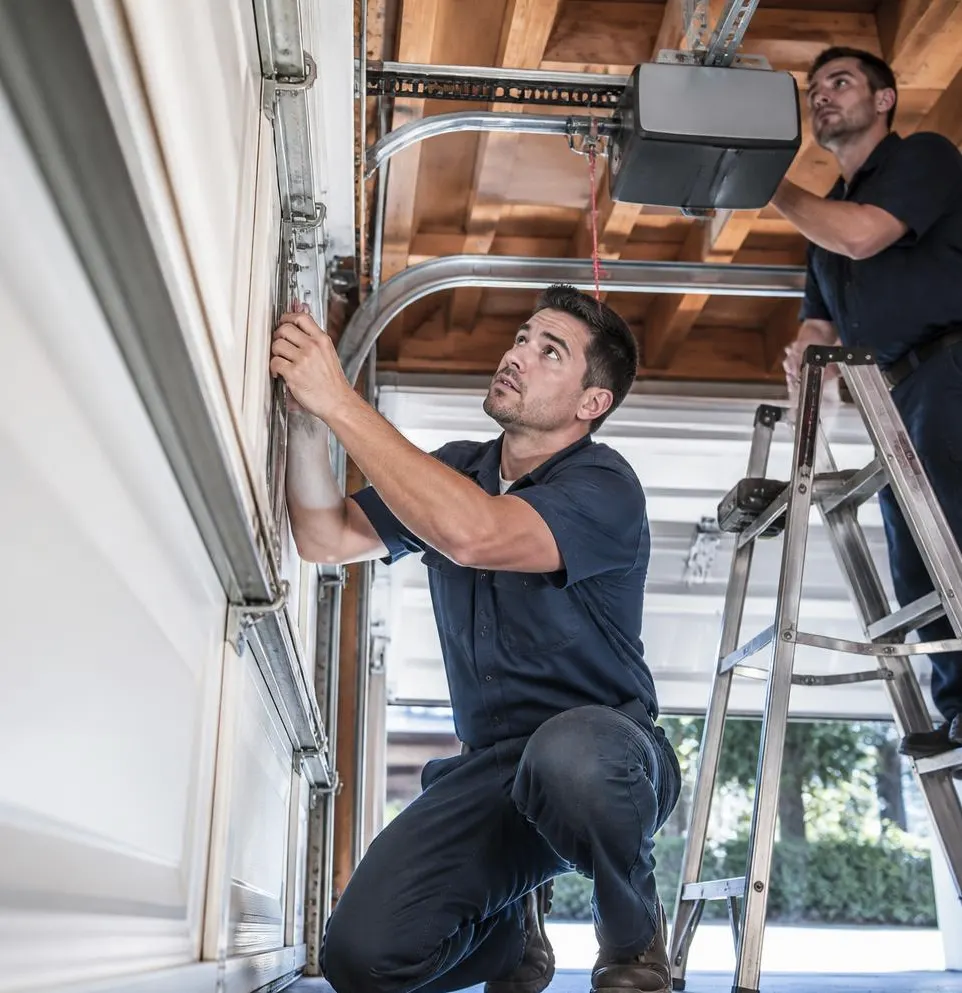
What a technician actually sees on these calls
A typical service call starts the same way: someone noticed the laundry room floor feels cold, or the wall shared with the garage is drafty, and they want to know if the garage door is to blame. Nine times out of ten, when we pull up the bottom seal and check the perimeter weatherstripping, we find daylight. Sometimes it's a quarter-inch gap where the rubber astragal has cracked and hardened from years of freeze-thaw cycles. Sometimes it's a door that's slightly out of square from an old spring or cable issue, so it never sits flush no matter how many times someone adjusts the opener's travel limit. On older homes in this area with original doors, it's often both at once — the door is doing its job mechanically, opening and closing fine, but it's not actually sealing.
That gap doesn't just let in cold air. In an attached garage, it lets cold air sit against the wall that backs up to your living space, your laundry room, or a bedroom above the garage. That's the part people argue about: one spouse says "it's just the garage, who cares," and the other says "it's making the whole house cold." They're both a little right, and here's the plain version of why.
Why an attached garage affects the rest of the house
Garages are almost never insulated or sealed to the same standard as the living space next to them. When a garage door leaks air, the garage itself swings closer to outdoor temperature — colder in winter, hotter and more humid in summer. That temperature difference pushes through the shared wall, the shared ceiling if there's a room above the garage, and any ductwork or plumbing that runs through the garage.
A few concrete ways this shows up:
- Shared walls feel cold to the touch in winter, even though they're drywall and insulation, because the garage-side temperature is doing the work of outdoor air.
- Rooms above an attached garage run colder or hotter than the rest of the house, because floor insulation over a garage rarely performs as well as insulation under a room that sits over a heated basement.
- HVAC ductwork or a furnace located in the garage loses or gains heat to the surrounding air before it ever reaches a register, which means your system works harder to hit the same thermostat setting.
- The thermostat cycles more often because the house is constantly losing heat (or gaining it in summer) through that one weak point, even if every window and exterior door in the house is sealed perfectly.
None of this requires the garage to be freezing or sweltering to matter. Even a 10-15 degree gap between the garage and the outdoors, instead of the 20-30 degree gap a sealed door would maintain, adds up over a full heating season.
Why this area makes it worse
Three things specific to this part of Pennsylvania make a leaky garage door more costly than it would be somewhere with a mild climate:
- Long, cold winters with real temperature swings. The furnace or heat pump runs for months, not weeks, so any ongoing heat loss compounds.
- Freeze-thaw cycles and road salt. They're hard on weatherstripping, bottom seals, and the metal track and hardware. Rubber that's been through several winters of expanding, contracting, and getting hit with salt spray cracks and shrinks faster than people expect.
- Older housing stock with original doors. A lot of homes here still have the door that came with the house, sometimes decades old. Even well-built doors from that era weren't engineered with today's weatherstripping or insulation standards, and the seals have had a long time to degrade.
How to check it yourself before you argue about it further
You don't need a technician to confirm whether this is a real issue in your house. Try this:
- Daylight test. Close the door at night and turn on the garage light (or have someone outside with a flashlight). Walk the perimeter from inside. Any visible light at the bottom, sides, or top is a gap that's also letting air through.
- Hand test. On a cold or windy day, run your hand slowly along the bottom seal and the side seals where the door meets the frame. Moving air is easy to feel even if you can't see a gap.
- Paper test. Close the door on a piece of paper at a few points along the bottom seal. If it slides out easily with no resistance, the seal isn't making contact there.
- Touch the shared wall. If you can get to drywall that backs onto the garage, feel it on a cold day. A noticeably cold wall, especially near the floor or around any penetrations, points to the garage acting like outdoor air.
If any of these come back positive, the fix is often simpler and cheaper than people assume — new weatherstripping and a new bottom seal, not a whole new door. But if the door itself is out of square, warped, or the panels have gaps from age and wear, sealing alone won't solve it.
When to call Mt Bethel Garage Door
If the daylight or paper test shows gaps along multiple sides, or the door doesn't close evenly, that's worth a real inspection rather than a trip to the hardware store. As part of garage door maintenance, we check whether the door is sitting square on its track, whether the springs are holding proper tension (a door that sags from worn springs will never seal right no matter how new the weatherstripping is), and we replace worn seals with weatherstripping rated for the freeze-thaw conditions here. If the door itself is original to an older house and beyond reasonable repair, we'll walk you through garage door installation options with better insulation and sealing, so the whole shared-wall problem goes away instead of getting patched year after year.
If you're in Mt Bethel, Bangor, Portland, Pen Argyl, Wind Gap, or anywhere else in the Slate Belt and you've settled the argument enough to want a real answer, give Mt Bethel Garage Door a call. We'll check the seal, check the balance, and tell you straight whether you need a $40 fix or something bigger.