
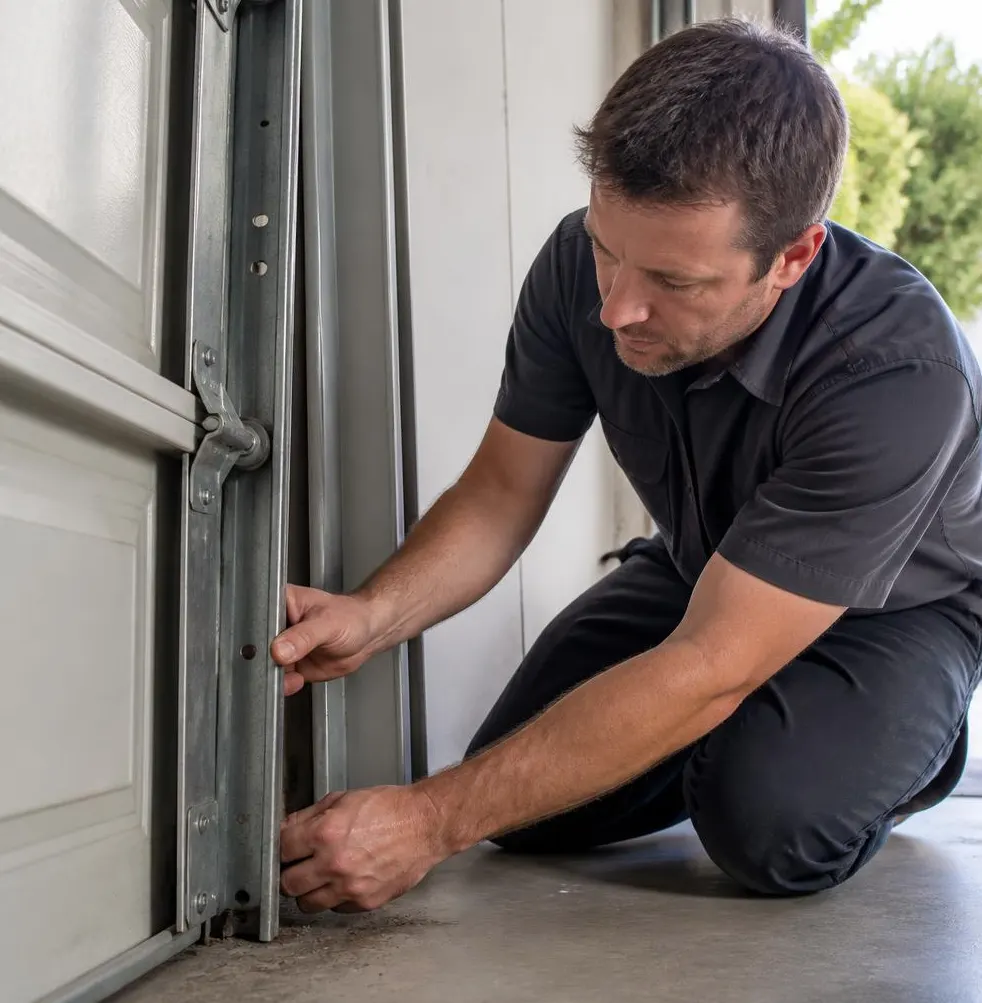
What a Technician Sees This Time of Year
Right about now, the calls start coming in. A homeowner's garage door worked fine all through October, then one cold morning in November it groans, jerks, or won't budge at all. Nine times out of ten, the door wasn't actually broken in October — it was just getting by on worn weatherstripping, dried-out hardware, and hinges that were already stiffening up before the first real cold snap hit. By the time there's snow on the ground, those small issues turn into stuck doors, dead openers, and snapped springs at the worst possible moment.
Winters here are hard on garage doors. We get long stretches of snow and ice, repeated freeze-thaw cycles, and road salt that gets tracked into garages and works its way into tracks and hardware. A lot of the housing stock in Mt Bethel, Bangor, Portland, and the surrounding Slate Belt towns still has original doors and openers from decades ago — solid units, but not built with today's insulation or sealing in mind. A few hours of prep now can save you an emergency call during a nor'easter.
Check the Weatherstripping and Bottom Seal
The rubber seal along the bottom of the door and the weatherstripping around the sides and top are usually the first things to fail. Over a summer of heat and UV exposure, rubber gets brittle and starts cracking or pulling away from the track. Once that happens, snow and wind-driven rain get underneath, and on really cold nights that moisture can freeze the door to the floor of the garage.
- Run your hand along the bottom seal — if it's hard, cracked, or flattened, replace it before winter, not after you're already stuck.
- Check the side and top weatherstripping for gaps where daylight shows through.
- If your garage is attached to living space, a bad seal doesn't just let in cold air — it's one of the bigger reasons attached garages feel like an icebox all winter.
Lubricate Before the Grease Thickens Up
Hinges, rollers, and the track itself need fresh lubrication heading into winter. Old grease and household oils thicken and gum up in cold temperatures, which is a big reason doors that opened fine in fall suddenly feel sluggish or noisy once it drops below freezing.
- Use a silicone-based garage door lubricant rather than WD-40 or household oil — those are fine for displacing moisture but don't hold up well in the cold.
- Lubricate hinges, rollers, the top of the track, and the springs themselves.
- Wipe down tracks first to remove any grit, dust, or old residue so the new lubricant actually does its job instead of sitting on top of gunk.
Inspect Springs Before Cold Makes Them Brittle
Steel springs lose a bit of flexibility in cold weather, and a spring that's already near the end of its life is far more likely to snap on a frigid morning than on a mild one in July. This is one of the most common winter emergency calls — a door that suddenly feels impossibly heavy, or a loud bang from the garage followed by a door that won't move.
- Look for visible gaps in the spring coils, rust buildup, or stretching compared to how it sat when new.
- Don't attempt to adjust or replace torsion springs yourself — they're under serious tension and have caused real injuries to homeowners who tried a DIY fix.
- If your opener strains, reverses unexpectedly, or the door feels unbalanced when lifted by hand (disconnect the opener first), that's a spring issue worth addressing now rather than during the next snowstorm.
Test the Opener and Battery Backup
Cold weather is tough on batteries and electronics. If your opener has a battery backup for power outages — common during nor'easters when lines go down — check that the battery still holds a charge. Also test the safety sensors near the bottom of the track; road salt and winter grime can cling to the sensor eyes and cause a door that won't close, or one that reverses for no obvious reason.
- Wipe the sensor lenses clean and make sure they're properly aligned.
- Test the manual release handle so you know it works if the opener loses power mid-storm.
- Replace opener remote batteries now rather than during a January cold snap.
Protect Tracks and Hardware from Salt
Salt brine tracked in on tires and boots doesn't stay on the garage floor — it splashes up onto tracks, hinges, and the bottom panel of the door. Combined with freeze-thaw cycles, this speeds up rust on older hardware significantly.
- Hose down the lower section of the door and tracks periodically through winter to rinse off salt residue.
- Check for rust spots on hinges and brackets, especially on original doors that have been through many winters already.
- A light coat of lubricant on exposed metal hardware adds a bit of protection against moisture.
When to Call Mt Bethel Garage Door
If you're noticing a slow or noisy door, a seal that's past saving, or a spring that looks worn, it's worth having it looked at before the first real cold snap rather than after. We handle garage door maintenance visits throughout Mt Bethel, Bangor, Portland, Pen Argyl, Wind Gap, and the rest of the Slate Belt, checking seals, lubrication, balance, and opener function in one visit. If a spring does let go or a door freezes shut overnight, our emergency garage door service means you're not stuck waiting days for a repair in the middle of winter.
Don't wait for the first hard freeze to find out your door isn't ready. Call Mt Bethel Garage Door today to schedule a winter maintenance check for your Mt Bethel, PA home or business.